
From Africa’s AIDS crisis to Gaza’s devastation – when reality demands more than explanation
Be that as it may, there are moments in history when suffering becomes so vast, so visible, that it begins to test not only institutions – but the language they use to explain themselves.
These are not moments of theory. They are moments when reality presses against principle, when lived experience begins to ask more of belief than belief is accustomed to giving.
Africa once stood at such a moment. At the height of the HIV/AIDS crisis, entire communities were being hollowed out. Families were lost, generations disrupted, and the scale of human loss reshaped the moral conversation in ways that few had anticipated.
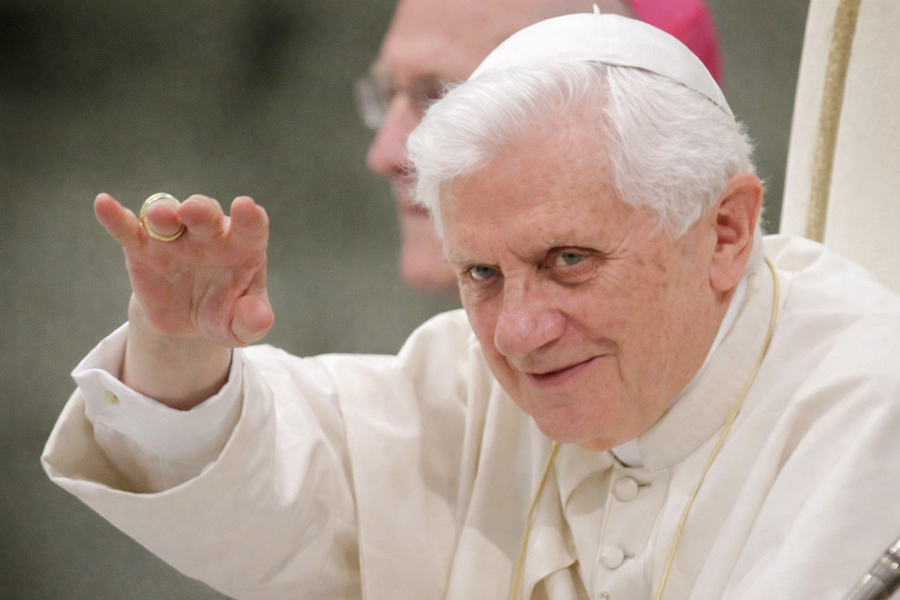
When Pope Benedict XVI spoke of condoms not being the answer, the reaction was not merely political – it was human. Because for those living within that crisis, the question was no longer what was doctrinally ideal. It was what might keep them alive.
Years later, Pope Francis approached the same terrain differently. He did not change doctrine, nor did he abandon principle. But he altered the tone. He spoke not only of rules, but of conditions – of poverty, inequality, and the structural realities that make suffering not incidental, but inevitable. In doing so, he shifted the conversation, if only slightly, from abstraction toward recognition.
That distinction matters.
Because today, that same tension returns – this time not in Africa, but in Gaza.
Across the world, we see images that do not lend themselves easily to explanation. Children without shelter, families without certainty, a landscape where survival has become the defining condition of daily life. And yet, the global response continues to be framed in arguments – of security, of retaliation, of justification – each carefully constructed, each grounded in its own logic.
But when suffering reaches this scale, language begins to change in meaning. It does not necessarily become incorrect. It becomes distant.
And distance, in moments like these, is what people remember.
This is not to deny complexity. Nor is it to dismiss the competing realities that shape conflict. But complexity does not erase consequence. And consequence, when it falls repeatedly on the most vulnerable, carries a moral weight that cannot be balanced by argument alone.
The lesson from Africa was never simply about condoms, nor even about doctrine itself. It was about whether institutions could speak in a way that met people where they were – at their most fragile, their most exposed, their most in need of recognition beyond reasoning.
That same question now stands, quietly but unmistakably, over Gaza.
Because those living through such moments are not engaged in debate. They are not weighing principle against counter-principle. They are living the outcome of decisions made elsewhere, in rooms far removed from the immediacy of their lives.
In that sense, the issue is no longer whether the world can explain what is happening.
It is whether it is close enough to feel it.
And history, when it is written, rarely begins with arguments. It begins with memory – with who was seen, who was heard, and who, in the face of overwhelming human suffering, chose to come closer rather than remain at a distance.

