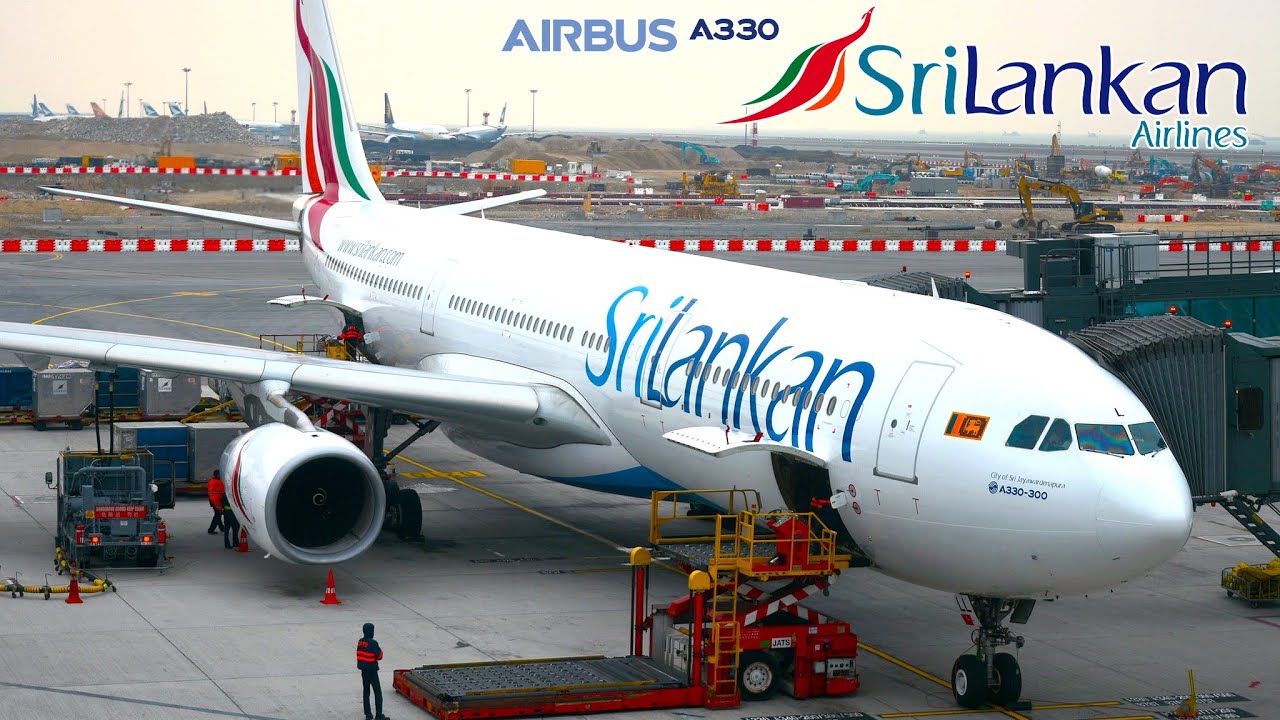
HOW A GLOBAL AVIATION GIANT BECAME ENTANGLED IN ONE OF THE WORLD’S BIGGEST CORRUPTION INVESTIGATIONS
Be that as it may, the Airbus corruption investigation pursued by the United Kingdom’s Serious Fraud Office was never merely about aircraft sales. It became something much larger: a global examination into how modern corporate influence, political access, intermediaries and hidden commission structures increasingly operate beneath the polished surface of international business.
And significantly for Sri Lanka, the affair also touched this country directly.
Submit Your Press Release
Get your company news, announcements, launches, appointments and events in front of a wider audience.


The investigation accelerated after Airbus itself disclosed concerns to UK authorities regarding irregularities connected to the use of intermediaries and consultants in securing aircraft and defence contracts supported by export-credit financing. That disclosure eventually triggered coordinated investigations involving the UK Serious Fraud Office (SFO), France’s Parquet National Financier and the United States Department of Justice.
What followed became one of the largest anti-corruption settlements in modern corporate history.
Investigators examined Airbus transactions across numerous jurisdictions including Sri Lanka, Malaysia, Indonesia, Saudi Arabia, Ghana, Kazakhstan, Taiwan and several others. Prosecutors alleged that Airbus had deployed opaque consultant arrangements, shell structures and concealed commissions in order to influence procurement decisions and secure lucrative contracts internationally.
Importantly, this was not the old-fashioned image of corruption involving suitcases of cash quietly exchanged in hotel rooms.
Modern corporate corruption rarely operates so crudely.
Instead, prosecutors described sophisticated intermediary systems involving:
consultants,
marketing agents,
advisory arrangements,
opaque commissions,
fictitious service agreements,
and layered financial structures designed to conceal the ultimate purpose of payments.
That distinction matters enormously because modern financial corruption increasingly hides itself within the appearance of legitimacy. Payments move through consultancy contracts. Commissions appear commercially structured. Offshore entities create distance between payer and beneficiary. By the time investigators begin reconstructing the money trail, the architecture often spans multiple countries and legal systems.
In January 2020, Airbus ultimately entered into coordinated Deferred Prosecution Agreements with authorities in the UK, France and the United States involving penalties amounting to approximately €3.6 billion globally. The UK component alone reportedly approached €1 billion.
The language used by investigators and judges was exceptionally severe. Elements of the conduct were reportedly described as “endemic” corruption spanning numerous jurisdictions over extended periods.
Yet legally, Airbus itself was not convicted following a conventional criminal trial.
Instead, the company entered into a Deferred Prosecution Agreement, commonly known as a DPA. That mechanism allows corporations to avoid full prosecution provided they admit wrongdoing, cooperate extensively, pay substantial penalties and implement compliance reforms under continuing oversight.
In simple terms, the corporation survives by paying heavily and cooperating heavily.
And perhaps that is where the deeper global discomfort surrounding cases like Airbus increasingly emerges.
The corporation pays billions. The headlines explode internationally. Compliance systems are rewritten. Lawyers, accountants and monitors move in.
Yet identifying and successfully prosecuting individual human beings often proves vastly more difficult.
That pattern repeats itself globally across many major corruption cases.
The Sri Lankan dimension of the Airbus affair became politically explosive because allegations surfaced regarding aircraft purchases connected to SriLankan Airlines during the Rajapaksa-era administration. International reporting and investigative material suggested that commissions linked to Airbus transactions involving Sri Lanka may have flowed through intermediary arrangements connected to politically exposed circles.
Those allegations generated enormous controversy domestically because SriLankan Airlines itself had already become symbolic of broader debates involving state enterprise governance, political influence, procurement opacity and public debt burdens.
However, an important legal distinction must be carefully understood.
The Airbus settlement itself did not automatically amount to criminal conviction of individual Sri Lankan political figures inside Sri Lankan courts.
That distinction is absolutely critical.
What the SFO and associated authorities established was that Airbus accepted responsibility for widespread failures relating to corruption prevention and intermediary practices internationally. Whether specific individuals within individual countries committed domestic criminal offences remained separate legal questions requiring separate evidentiary standards and domestic prosecutorial processes.
And perhaps that is why the Airbus case still resonates so powerfully even today.
Because it exposed how vulnerable sectors such as aviation, defence and large-scale state procurement can become when massive contracts intersect with political power, opaque intermediaries and weak oversight structures.
The case also demonstrated something profoundly uncomfortable about the modern global economy itself: corruption has evolved alongside globalization. Money moves internationally. Influence moves internationally. Shell structures move internationally. Political relationships and commercial incentives increasingly operate across borders faster than regulators themselves can comfortably monitor.
And countries like Sri Lanka become particularly vulnerable within such systems because strategic state procurement often unfolds inside environments where political influence, national prestige projects and limited public scrutiny can dangerously overlap.
Which perhaps explains why the Airbus affair ultimately became much larger than aviation.
It became a case study in how modern multinational corruption operates beneath the language of consultancy, advisory services and commercial facilitation while enormous public-interest decisions involving taxpayer money quietly unfold behind closed doors.
And that lesson remains deeply relevant for Sri Lanka even now.
Because ultimately the real danger in corruption is not merely the payment itself.
It is the gradual corrosion of public trust in whether major state decisions are being made for the national interest or for the private benefit of hidden networks operating underneath.