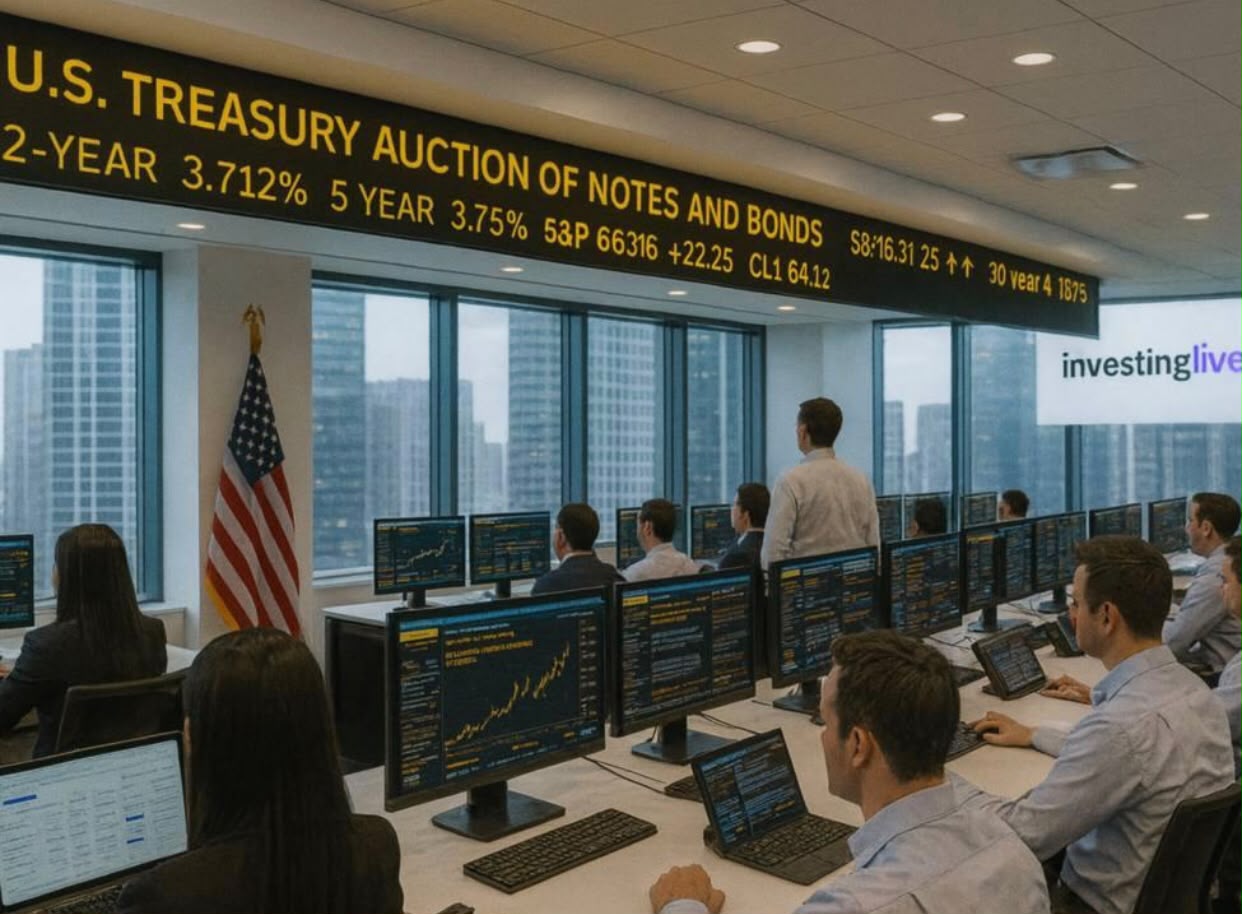
The yield on the United States ten-year Treasury has climbed above 5.3 percent, reaching territory not seen since 2002. To somebody buying groceries in Colombo that may sound spectacularly remote. It isn’t. When the world’s benchmark borrower starts paying more than five percent for ten-year money, everybody else’s money has to compete with it.
The thirty-year US Treasury yield has also moved to around 5.65 percent as markets wrestle with inflation, government borrowing and concern about the scale of public debt.
At the same time Brent crude has again moved above US$100 a barrel amid the continuing Middle East conflict.
Submit Your Press Release
Get your company news, announcements, launches, appointments and events in front of a wider audience.


Put those two developments together. Money is becoming expensive while energy is becoming expensive.
That is not an especially comfortable combination.
US Treasury securities occupy a peculiar position in global finance. They are treated as one of the benchmark assets against which other investments are judged.
If an investor can obtain more than five percent from lending money to the United States Government for ten years, a considerably riskier borrower has to offer something sufficiently attractive to persuade that investor to go elsewhere.
That matters to emerging markets. It matters to companies raising international debt.
And eventually it matters to countries such as Sri Lanka as they rebuild access to international capital after sovereign default and debt restructuring.
There is another channel.
Higher American yields can attract money towards dollar assets, putting pressure on currencies elsewhere. A stronger dollar makes dollar-priced imports more expensive for countries whose currencies weaken against it.
Oil, unfortunately, is priced in dollars. Sri Lanka therefore has no shortage of reasons to watch both numbers.
The country has already spent approximately US$4 billion importing fuel during the first eight months of this year. Higher oil prices threaten that bill directly. A stronger dollar can make the problem still less pleasant.
None of this means that a 5.3 percent Treasury yield automatically produces a Sri Lankan crisis.
It does not.
Sri Lanka’s immediate circumstances are different from those of 2022. The country has restructured debt, reserves have recovered and the IMF programme has imposed a very different fiscal and monetary framework.
But global financial conditions still matter. Sri Lanka cannot set the American interest rate any more than it can set the price of Brent crude. What it can do is reduce the extent to which either can hurt us.
That means controlling borrowing requirements, maintaining reserves, expanding exports and reducing unnecessary dependence upon imported energy.
Which brings us back to the argument running through several of tomorrow’s stories.
Foreign-exchange resilience is not simply the number of dollars sitting at the Central Bank. It is how many dollars the economy can earn and how few it unnecessarily has to spend.
America’s bond market is currently reminding the world of something investors occasionally forget during years of cheap money.
Capital has a price.
When the safest large borrower in the market starts offering more than five percent, riskier borrowers do not get to pretend nothing happened.
Be that as it may, Sri Lanka has already learnt what happens when dollars become scarce.
It would be useful not to have to learn what happens when they become expensive as well.