The NPP promised to break with Sri Lanka’s failed political order. Nearly two years later, the harder truth is that replacing the government was easier than changing the state and unless it can reform the bureaucracy, confront loss-making state enterprises, deliver justice and turn promises into functioning institutions, its revolution in politics risks ending as continuity in practice.
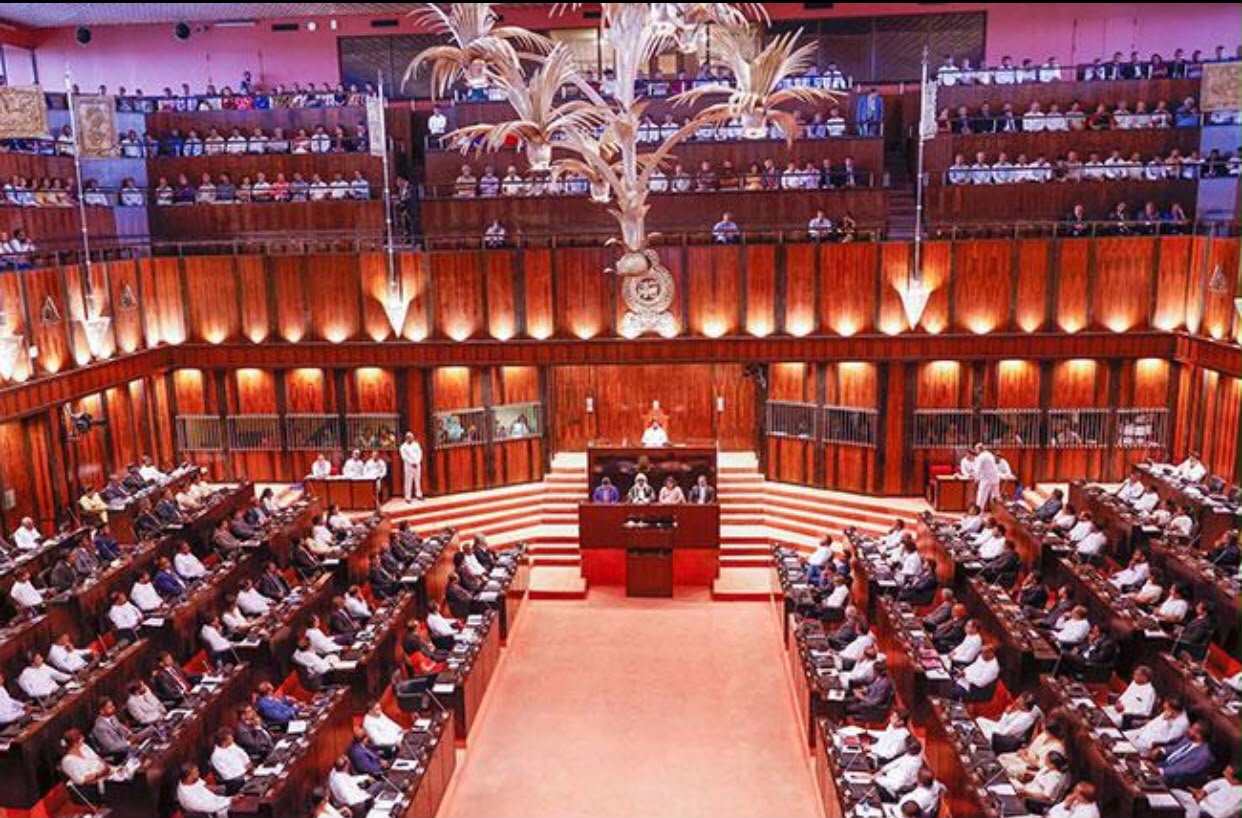
The National People’s Power did not win power by offering Sri Lanka a slightly cleaner version of what came before. Its proposition was much larger: that the economic collapse of 2022 was not an isolated failure of fiscal management, but the product of a political system shaped by patronage, corruption, elite privilege, weak institutions and repeated failures of accountability. Its answer was therefore not simply a new administration but a different way of governing. In November 2024, the NPP won 61.56% of the parliamentary vote and 159 of 225 seats, giving it the kind of political authority few Sri Lankan governments have enjoyed in recent decades.
That mandate, however, did not automatically produce a state capable of delivering the transformation that had been promised. The government inherited the same ministries, procurement systems, state-owned enterprises, courts and bureaucratic cultures it had spent years criticising. Nearly two years later, the central weakness of its governing project is clearer: political authority was concentrated quickly, but administrative capacity was not. The question is no longer whether Sri Lanka needs reform. It is whether the NPP fully understood that changing the country would first require changing the machinery through which change itself had to be delivered.
Submit Your Press Release
Get your company news, announcements, launches, appointments and events in front of a wider audience.


There has been meaningful movement. Anti-corruption measures have advanced, some political privileges have been curtailed and macroeconomic stabilisation has continued. But passing a law, announcing a programme or allocating money is not the same as delivering an outcome. Sri Lanka’s problem is not merely a shortage of policy ideas. It is an execution problem: ministries overlap, officials operate cautiously, accountability is diffused and citizens are pushed through layers of administration that reward persistence and personal access rather than efficiency.
This is why digitalisation matters far more than as a technology policy. Sri Lanka’s public administration still relies heavily on physical documents, face-to-face interaction and procedures requiring citizens to move between offices carrying information that public institutions should already be able to share. Every unnecessary point of human discretion creates delay and, at its worst, opportunities for favouritism or petty corruption. A government serious about changing the system should therefore treat digitalisation as an instrument of institutional reform.
There has been progress. GovPay, launched in February 2025, passed Rs 2bn in digital transactions by the end of that year, processing more than 69,000 transactions across thousands of government services. The government has since approved Digital Transformation Units and Chief Digital Officers across public institutions. But putting old bureaucracy behind an online interface is not transformation. The real test is whether agencies share data, processes become shorter, transactions are traceable and citizens no longer need personal relationships with officials to complete routine tasks. Done properly, digital government can reduce administrative costs, save citizens time, narrow opportunities for petty corruption and make decisions easier to audit.
The same logic should apply to state-owned enterprises. If the NPP’s central diagnosis is that Sri Lanka’s political-economic system failed, it cannot exempt the commercial state from scrutiny. An IMF assessment of 41 strategically important SOEs found that their total liabilities stood at about Rs 3.2tn at the end of 2023, equivalent to 11.7% of GDP. The five largest accounted for approximately Rs 2.9tn, while net government outflows to those enterprises averaged around Rs 80bn every year between 2018 and 2023, or about 0.4% of GDP annually.
That is not an abstract accounting problem. Every rupee absorbed by an enterprise that cannot sustain itself is a rupee that ultimately competes with expenditure on hospitals, schools, welfare, public transport, infrastructure or debt reduction. Privatisation therefore cannot be discussed solely as a debate about ideology or ownership. It is also about the opportunity cost of government capital. If private investment can assume commercial risk, provide capital and operate a business without recurring demands on the Treasury, the government must explain why taxpayers should continue to carry that burden instead.
Those figures do not prove that every state enterprise should be privatised. Some provide essential infrastructure or fulfil social obligations that cannot be measured by profit alone. Nor does private ownership automatically guarantee efficiency. But where an enterprise repeatedly consumes public resources without a compelling strategic justification, privatisation, partial divestment, management contracts or credible private-sector partnerships should be legitimate policy options rather than political taboos.
Sri Lankan Airlines is the classic example. In the year ending March 2025, the company recorded a net loss of approximately Rs 7.6bn, while accumulated company losses exceeded Rs 616bn. Its total equity was negative by more than Rs 403bn, and its current liabilities exceeded current assets by about Rs 368bn. These are not numbers that can be dismissed as the temporary difficulties of an ordinary commercial company. They represent a longstanding fiscal risk attached to a business whose commercial liabilities ultimately sit close to a state already emerging from sovereign default.
The strongest argument for restructuring Sri Lankan is therefore not that government ownership is inherently incompetent or that private ownership is inherently virtuous. It is simpler: the state must justify why the public should continue carrying commercial risk when the same fiscal capacity could be used elsewhere.
The experience of the board appointed after the NPP came to power makes the institutional problem particularly revealing. Sarath Ganegoda and Rohan Goonetilleke were appointed to the airline’s board in October 2024, shortly after the new administration took office. They were not remnants of the political order the NPP had displaced; they formed part of a new leadership structure brought into an airline already burdened by debt and years of restructuring attempts. Yet both resigned effective 31 March 2026. Reports at the time also indicated that other directors had considered stepping aside amid frustration surrounding the carrier’s unresolved financial and restructuring difficulties.
It would be inaccurate to say that the entire board resigned: several directors remained. But that makes the lesson no less important. Here was a new government placing new people into an old institution, apparently with an intention to improve it, only to confront the same structural constraints that had defeated reform efforts before. Competent people and genuine intentions cannot by themselves repair an enterprise whose debt structure, political constraints and ownership model remain unresolved. Changing the individuals at the top is not the same as changing the system underneath them.
That should force a harder question inside the NPP. If the government argues that 76 years of political and economic management failed, then it must also be willing to examine the businesses that the state has insisted on continuing to own. Condemning the old system while preserving every commercial structure inherited from it is not transformation. Sometimes rebuilding the state means making it stronger. Sometimes it means reducing the number of things the state attempts to do badly. The same gap between promise and institutional delivery appears in the NPP’s minority-rights commitments. The movement promised equality, safeguards against discrimination and repeal of the Prevention of Terrorism Act. Yet the PTA remained in use, with the government itself reporting 49 arrests under the legislation during the first five months of 2025, while human-rights organisations continued to raise concerns about detention, surveillance and accountability for past abuses.
The government’s language has generally been more inclusive than that of several predecessors, but tone is not institutional change. Repealing or replacing the PTA requires legislation and a credible security framework; resolving disappearances requires investigators, prosecutors and functioning evidentiary systems; land disputes require administrative decisions capable of surviving political pressure. Again, the difficulty is not identifying what should change. It is constructing institutions capable of carrying the change through.
Judicial reform presents another test. In September 2026, Parliament passed the Twenty-Second Amendment, increasing the retirement age of Supreme Court judges from 65 to 67 and Court of Appeal judges from 63 to 65, while expanding the Court of Appeal from 19 to 24 judges. The government has presented the reforms in terms of retaining judicial experience and improving the disposal of cases. The Bar Association had previously raised concerns over proposals to extend judicial retirement ages. The larger lesson is that institutional reform becomes more complicated once a movement moves from opposition to power: it must use state authority to change institutions while ensuring that the exercise of that authority does not undermine confidence in their independence.
The NPP’s problem, then, is not that its manifesto was too ambitious. Many of Sri Lanka’s failures require structural change on precisely that scale. The problem is that electoral authority can easily be mistaken for institutional capacity. A government can command a two-thirds majority and still discover that ministries do not coordinate, procurement moves slowly, SOEs consume fiscal space, digital systems do not communicate and reform commitments collide with entrenched administrative incentives.
The greater danger is that the system gradually absorbs the reformers: a ministry accommodates a new policy without changing its incentives; an SOE restructuring leaves its fiscal burden intact; a service is digitised without redesigning the process; a justice commitment becomes another committee or pending draft. The language of transformation survives while the operating logic of the state barely changes.
The NPP still possesses an unusual advantage: political authority. Its parliamentary majority means legislative obstruction cannot explain every delay, and its mandate gives it room to reorganise institutions. That is precisely why state capacity can no longer be treated only as an inherited problem. If administrative weakness is blocking reform, administrative reform must itself become the priority.
That requires a more disciplined interpretation of transformation: interoperable digital government, functioning procurement, credible anti-corruption institutions, a rational strategy for loss-making SOEs, measurable savings for the Treasury, concrete movement on minority justice and safeguards that strengthen confidence in judicial independence. These are not separate policy objectives. They determine whether the Sri Lankan state will be capable of delivering almost anything else more effectively.
The NPP has already proved that it can overturn Sri Lanka’s electoral order. Its defining test is whether it can prevent the old state from simply absorbing the new government.