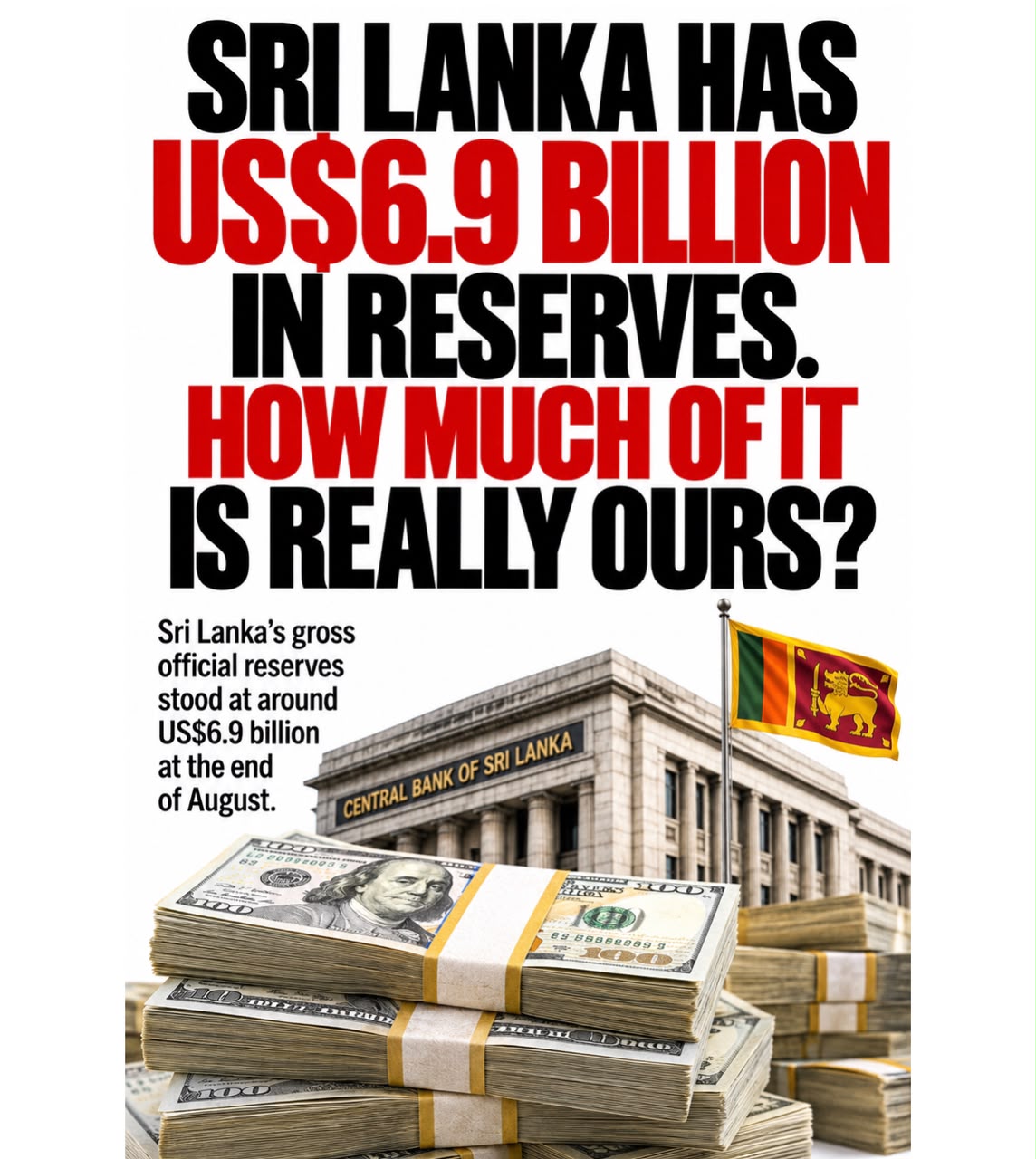
Sri Lanka’s gross official reserves stood at around US$6.9 billion at the end of August. It is an important recovery from the desperation of 2022 and certainly worth acknowledging. But gross reserves and money immediately available for Sri Lanka to spend are not necessarily the same thing.
There are few numbers that demonstrate Sri Lanka’s recovery from the economic crisis more dramatically than foreign exchange reserves. In 2022, the country reached the point where finding dollars to pay for essential imports became a national emergency. Fuel queues, power cuts and shortages were the visible consequences of a balance sheet that had gone badly wrong.
Today the picture is considerably better. Gross official reserves are around US$6.9 billion, giving Sri Lanka a foreign exchange cushion that would have appeared almost unimaginable during the worst days of the crisis.
Submit Your Press Release
Get your company news, announcements, launches, appointments and events in front of a wider audience.


That is an achievement and should be recognised as one.
But there is a danger in allowing one large number to do too much work.
Gross official reserves are exactly what the description says they are: gross. They can include foreign currency assets that are subject to particular arrangements or cannot necessarily be treated in exactly the same way as freely usable dollars sitting in an account waiting to pay an import bill.
The most obvious example in Sri Lanka’s case has been the currency swap with the People’s Bank of China. That arrangement has formed part of the country’s reported reserve position, while its usability has historically been subject to conditions.
That does not make the reserve figure false. It makes understanding its composition important.
There is another reason the distinction matters. Sri Lanka is moving from the immediate crisis-management phase into a period in which external debt payments again become increasingly relevant. The country must finance imports, meet external obligations and maintain enough reserves to convince markets that another foreign exchange crisis is not waiting around the corner.
The headline figure therefore tells only part of the story.
What matters is how much of the reserve stock is readily usable, how rapidly the Central Bank is accumulating foreign currency, what liabilities sit against those assets and how the position changes as debt-service obligations increase.
There is also an interesting policy tension. The Central Bank wants to build reserves, which generally means purchasing foreign currency from the domestic market when conditions allow. At the same time, businesses need dollars for imports and investors need confidence that foreign currency can move through the economy without the restrictions associated with the crisis years.
Building the buffer without unnecessarily distorting the market is therefore part of the challenge.
Sri Lanka should nevertheless take considerable comfort from how far it has travelled. A country that once struggled to finance basic imports now has billions of dollars recorded in official reserves. That represents restored tourism earnings, remittances, exports, external financing and a degree of confidence that simply did not exist during the collapse.
But confidence is better served by clarity than by impressive headline numbers.
The public should be able to understand not merely how large Sri Lanka’s reserves are, but what they consist of, how much is readily available and what level the country ultimately needs if it is to withstand another serious external shock.
US$6.9 billion is certainly better than the alternative Sri Lanka experienced four years ago. The next stage of the recovery should be ensuring that the country’s reserve strength is as substantial underneath the headline as it appears from the headline itself.
Be that as it may, having US$6.9 billion in gross reserves is reassuring. Knowing exactly how much of it we can use would be even more so.