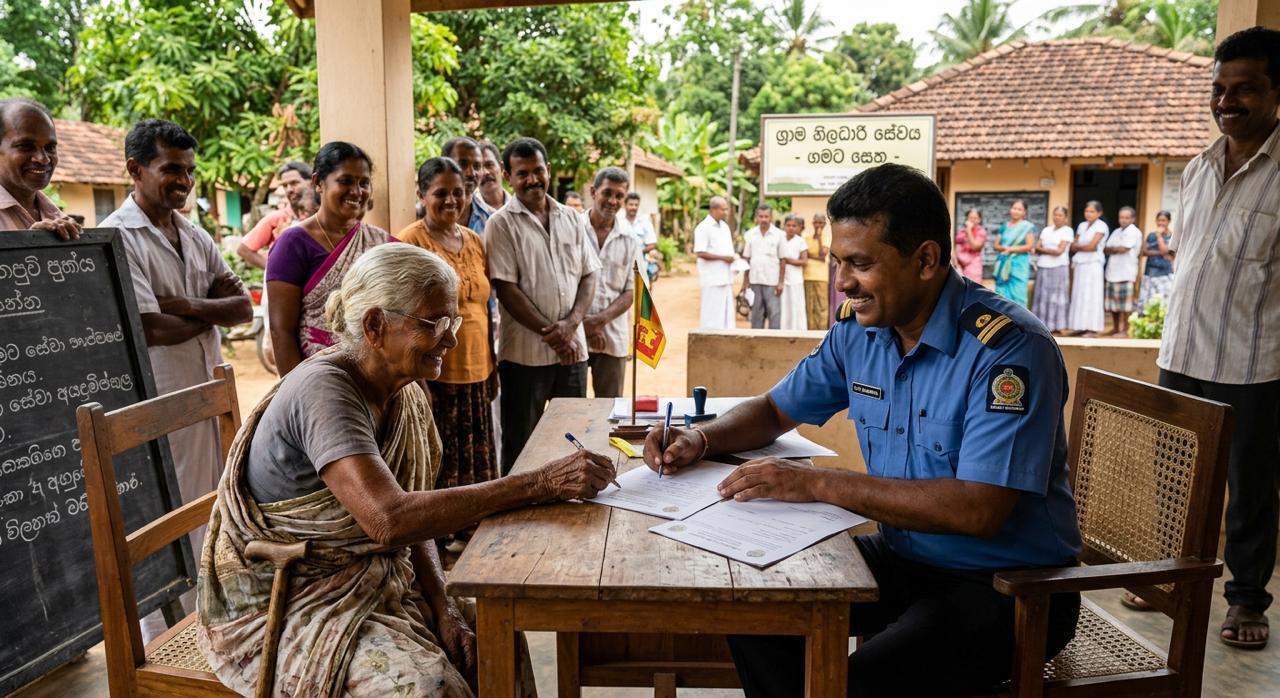
The Government has moved to strengthen Sri Lanka’s grassroots administration by appointing 1,540 Grama Niladharis, with further recruitment planned next year. The appointments should help address longstanding vacancies, but the real test will be whether citizens experience faster, fairer and more accessible public services.
The Grama Niladhari is, for millions of Sri Lankans, the most immediate and recognisable representative of the State. Long before a citizen encounters a minister, a ministry secretary or a senior public official, it is often the Grama Niladhari who becomes the first point of contact with government administration.
Births, deaths, residency confirmations, welfare applications, disaster assistance and numerous other administrative requirements bring ordinary citizens into contact with these officers. Their responsibilities are substantial, their geographical coverage can be demanding, and their effectiveness can determine whether a citizen receives a public service promptly or becomes trapped in a bureaucratic process.
Submit Your Press Release
Get your company news, announcements, launches, appointments and events in front of a wider audience.


The Government’s decision to appoint 1,540 officers to Grade III of the Grama Niladhari Service is therefore welcome. Public Administration Minister Chandana Abeyratne has indicated that the recruitment follows the introduction of a new Service Minute and is intended to address longstanding vacancies and administrative difficulties.
The Minister has also disclosed that preliminary arrangements are being made to recruit more than 1,500 additional officers next year. According to the Government, some existing officers have been required to cover two administrative divisions because of staff shortages.
That is an unacceptable situation if the consequence is that citizens must wait unnecessarily for essential services. However, appointing additional personnel is only one part of the solution.
Sri Lanka’s public administration has historically been characterised by an elaborate hierarchy of departments, offices, procedures and approvals. The citizen frequently bears the burden of navigating that machinery, sometimes travelling considerable distances, producing documents already held by another government institution and returning repeatedly to complete relatively straightforward transactions.
A properly functioning public service should minimise these burdens rather than perpetuate them.
The Grama Niladhari Service offers an opportunity to demonstrate that public administration can be modernised without abandoning the personal accessibility that rural communities particularly require. Digitised records, standardised procedures, transparent processing times and better coordination between government departments could substantially improve the service delivered.
But digitalisation must not become another obstacle. Elderly citizens, people with disabilities and those without access to smartphones or reliable internet connections must continue to receive assistance through accessible local offices.
There is also the question of accountability. How does the Government measure the performance of a Grama Niladhari division? Is it through the number of certificates issued, the speed of processing applications, the accuracy of records or the satisfaction of the people served?
These are not unreasonable expectations. Citizens finance the public service through taxation, and they are entitled to expect professionalism, courtesy and efficiency in return.
The Government should publish the number of vacancies filled, the geographical distribution of the new appointments and the expected improvements in service delivery. It should also explain whether additional recruitment will be accompanied by improved training, equipment and administrative oversight.
Public-sector employment must serve a public purpose. It cannot be regarded merely as a means of expanding the government payroll or fulfilling political commitments.
Be that as it may, the appointment of 1,540 Grama Niladharis represents an opportunity to strengthen the relationship between the State and its citizens. Whether that opportunity is realised will not be determined by the number of appointment letters distributed, but by the quality of service delivered in the villages of Sri Lanka.