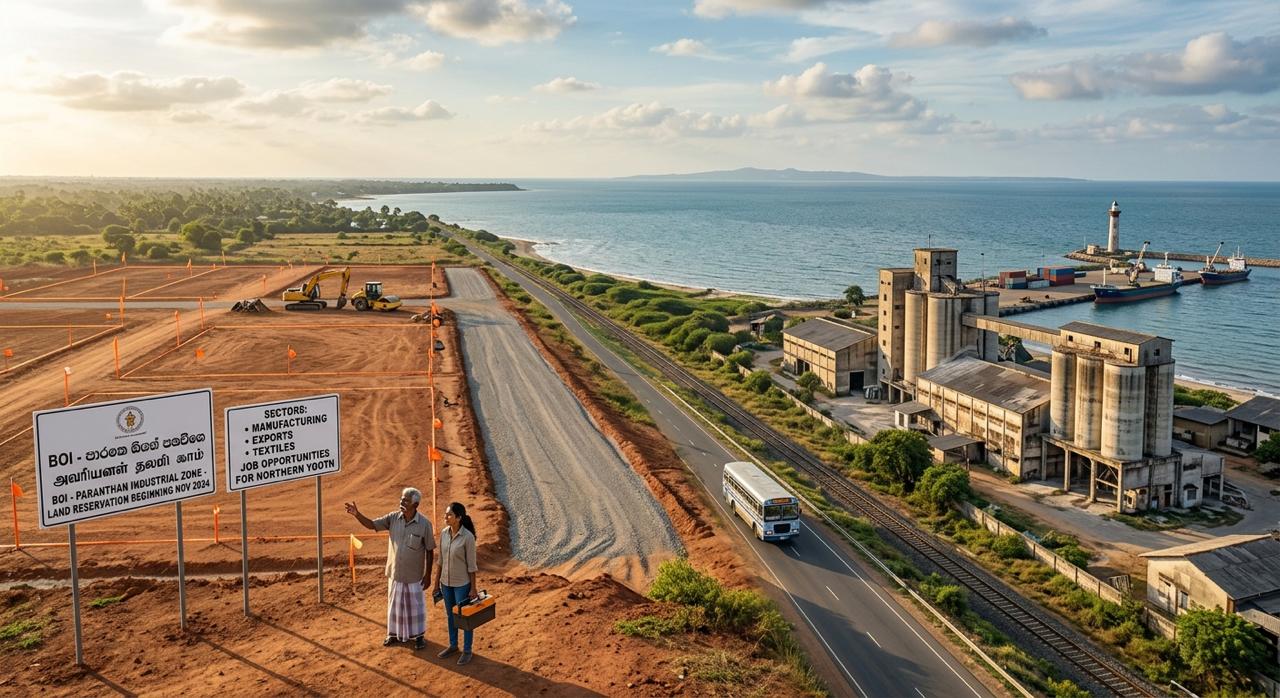
The Board of Investment is advancing plans for two industrial zones at Paranthan and Kankesanthurai, with investor land reservations expected to begin at Paranthan by the end of November. The proposals could provide an important economic opportunity for Northern Sri Lanka, but the real test will be whether investment announcements translate into functioning factories, sustainable employment and prosperity for communities that have waited far too long.
Northern Sri Lanka has heard many promises about economic development. Since the end of the civil war in 2009, successive governments have spoken of rebuilding infrastructure, attracting investment, creating employment and transforming the region into a productive contributor to the national economy. Yet the distance between those ambitions and the economic realities experienced by many Northern families remains considerable.
The Board of Investment’s plans to develop industrial zones at Paranthan and Kankesanthurai therefore deserve serious attention. The initiative has the potential to create new opportunities for manufacturing, exports and employment in a region whose economic prospects have too often been constrained by inadequate investment and limited industrial activity.
Submit Your Press Release
Get your company news, announcements, launches, appointments and events in front of a wider audience.


According to the announced plans, the BOI expects to open land reservations for prospective investors at Paranthan towards the end of November. Infrastructure development is also envisaged for the proposed zones, with the intention of establishing facilities capable of accommodating industrial enterprises.
But reserving land is not the same as securing investment. Neither is establishing an industrial zone equivalent to creating an industrial economy.
The first question concerns investor commitments. How many companies have formally expressed interest in establishing operations at these locations? Have any entered into binding agreements? What sectors are being targeted, and what level of capital investment is anticipated?
These questions matter because Sri Lanka has accumulated considerable experience in announcing industrial projects that subsequently encounter delays involving land, infrastructure, financing and administrative approvals.
The Northern Province presents both opportunities and challenges. Its geographical position offers potential advantages for maritime trade, logistics and commercial links with southern India. Its communities possess skills, entrepreneurial experience and a strong interest in employment opportunities that would allow younger generations to build their futures without leaving their home districts.
However, industrial development requires considerably more than available land.
Investors need reliable electricity, adequate water supplies, functioning transport connections, telecommunications infrastructure and predictable regulatory procedures. They also need confidence that approvals will be processed efficiently and that policy commitments will survive changes in political leadership.
The BOI should therefore explain the infrastructure requirements of both zones, the estimated development costs and the timetable for completing essential facilities.
The question of employment is equally important. Will the proposed industries create meaningful opportunities for local residents, or will skilled positions be filled predominantly by workers recruited from elsewhere?
There is nothing inherently objectionable about labour mobility within Sri Lanka. But a development programme intended to strengthen the Northern economy should include serious consideration of vocational training, local recruitment and opportunities for Northern entrepreneurs to participate in supply chains.
Environmental safeguards must also be addressed from the beginning. Industrial development cannot be pursued by transferring pollution, water shortages or other environmental costs to communities that have already experienced considerable hardship.
The Government should publish a transparent development framework identifying prospective industries, investment targets, employment projections and infrastructure commitments.
Northern Sri Lanka does not require preferential treatment at the expense of other regions. It requires a fair opportunity to participate in national economic growth.
Be that as it may, the success of Paranthan and Kankesanthurai will not be measured by the number of hectares allocated or the ceremonies held to announce their development. It will be measured by factories operating, workers receiving wages, businesses generating exports and Northern families experiencing an improvement in their economic circumstances.