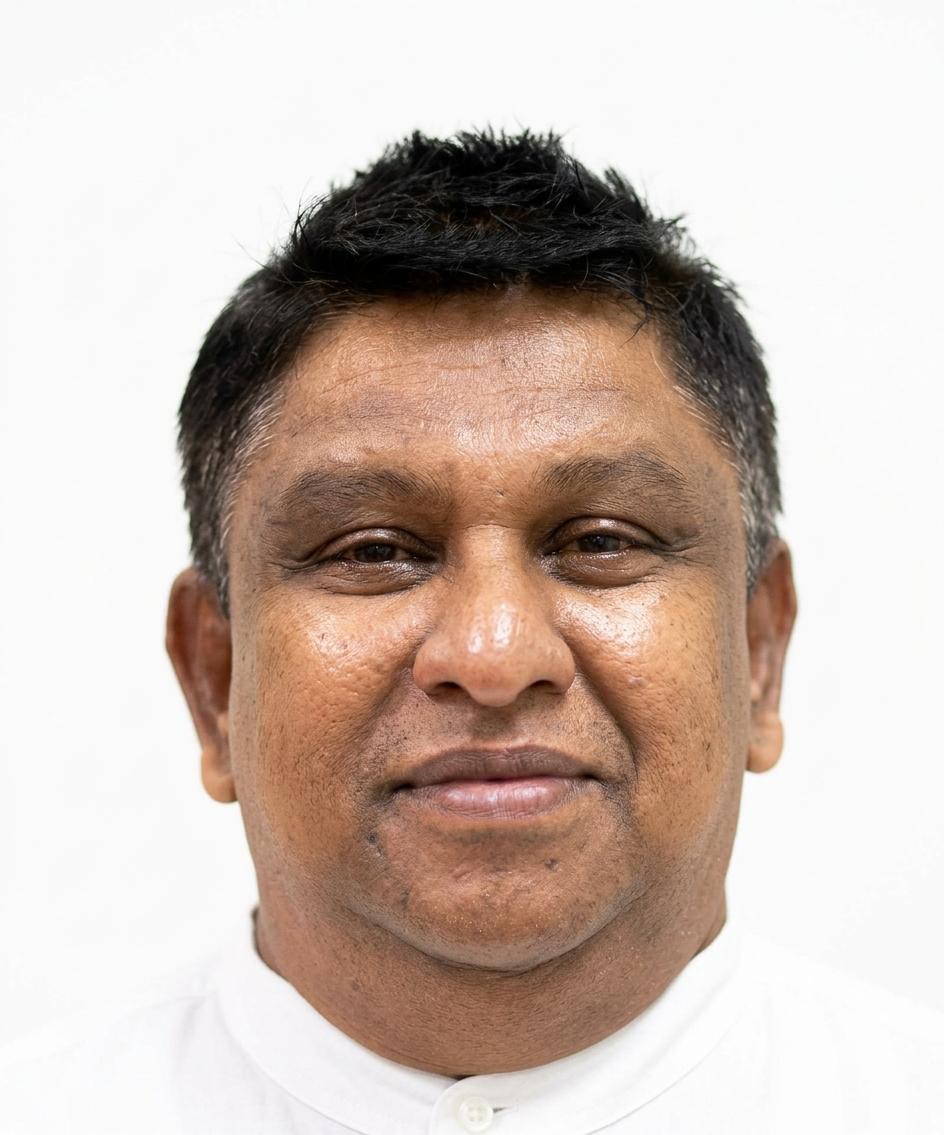
Badulla District Parliamentarian Chamara Sampath Dassanayake has been remanded until 23 October following his arrest by the Commission to Investigate Allegations of Bribery or Corruption. Investigators allege that money obtained from businesses involved in phosphate imports was channelled through the bank account of his secretary and subsequently used for political activities. The allegations are serious. Proving them is now the responsibility of the prosecution.
The arrest and remanding of Parliamentarian Chamara Sampath Dassanayake on Monday marks another significant development in Sri Lanka’s expanding investigations into alleged corruption involving serving and former holders of public office. Dassanayake was arrested after several hours of questioning by the Commission to Investigate Allegations of Bribery or Corruption and subsequently produced before the Colombo Chief Magistrate’s Court, which ordered that he be remanded until 23 October.
According to investigators, the allegations concern the solicitation of Rs. 8.1 million from three companies engaged in phosphate imports. The money was allegedly deposited into the bank account of Sumathipala Liyanarachchi, who served as Dassanayake’s secretary. Investigators further allege that the funds were subsequently used for political activities and that the payments were obtained without following any lawful or approved procedure.
Submit Your Press Release
Get your company news, announcements, launches, appointments and events in front of a wider audience.


The allegations raise questions extending beyond the conduct of one politician. If businesses were asked to provide money in circumstances connected to official authority, the investigation must establish precisely what was requested, who made the request, whether any advantage was promised or provided and what happened to the money after it entered the account identified by investigators.
Dassanayake also faces separate allegations concerning the acceptance of Rs. 2.4 million from three businessmen involved in the gem trade. Proceedings relating to that matter are already before court. The existence of multiple allegations does not establish guilt in any of them, and each must be considered according to its own evidence.
There is a broader institutional question here. Political financing in Sri Lanka has long occupied an uncomfortable space between legitimate contributions, personal relationships, commercial expectations and the exercise of official influence. Money can enter political activity through arrangements that are difficult to examine, particularly when transactions involve associates rather than the politicians themselves.
That is precisely why the financial trail matters. Investigators must establish not merely whether money changed hands, but whether the circumstances constituted an offence. Equally, the defence must have every opportunity to challenge the allegations and test the evidence.
The arrest comes amid heightened public attention to corruption investigations involving individuals associated with successive administrations. The temptation to treat each arrest as evidence of a successful anti-corruption campaign is understandable, but misplaced. An arrest demonstrates that investigators have taken a particular legal step. It does not establish that a crime has been committed.
Sri Lanka’s experience provides ample reason for caution. High-profile investigations have sometimes generated enormous publicity without producing corresponding convictions. Political opponents have celebrated arrests, only to discover later that the evidence presented in court was insufficient to sustain the accusations.
The Commission must therefore be judged by the quality of its investigations, the integrity of its procedures and the outcomes established through the judicial process.
Dassanayake is entitled to the presumption of innocence. The public is entitled to a thorough investigation. Neither entitlement should be sacrificed to political convenience.
Be that as it may, the true measure of Sri Lanka’s anti-corruption effort will not be how many politicians enter remand prison, but how many allegations can be proved through evidence that withstands judicial scrutiny.