
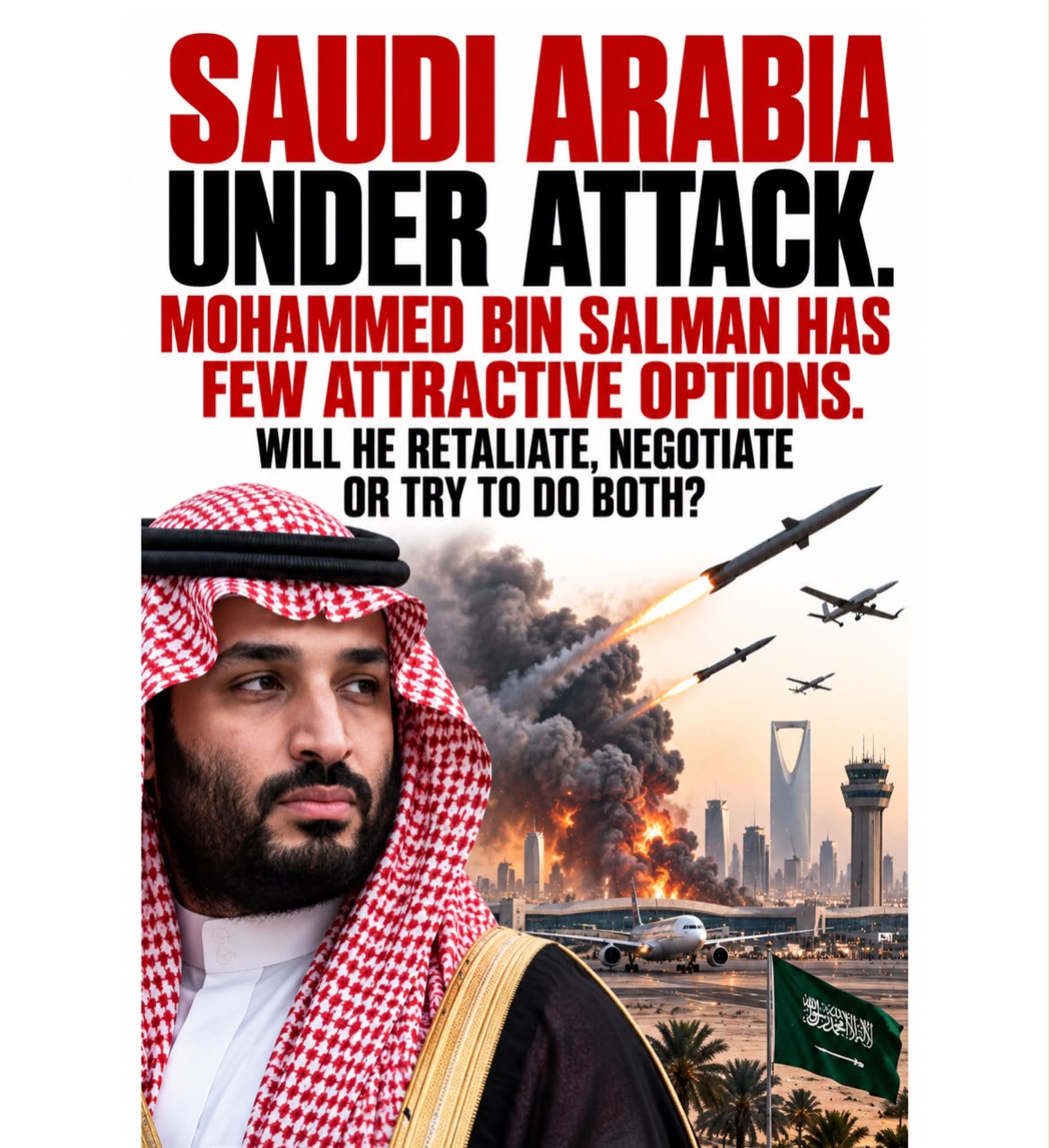
Repeated missile and drone attacks attributed to Yemen’s Iran-backed Houthi movement have presented Saudi Crown Prince Mohammed bin Salman with a difficult strategic dilemma. Military retaliation could produce further escalation, while restraint may fail to deter additional attacks. For a kingdom investing heavily in economic transformation, the immediate security crisis threatens ambitions that extend far beyond the battlefield.
Saudi Arabia’s Crown Prince Mohammed bin Salman faces a difficult choice as the kingdom confronts continuing missile and drone attacks attributed to Yemen’s Houthi movement. The attacks have disrupted civilian aviation, caused casualties and raised questions about the security of infrastructure essential to Saudi Arabia’s economy.
The challenge is not simply military. It concerns the direction of the kingdom’s economic and diplomatic strategy.
Submit Your Press Release
Get your company news, announcements, launches, appointments and events in front of a wider audience.


For several years, Mohammed bin Salman has sought to transform Saudi Arabia’s international identity. Vision 2030 envisages a country less dependent upon petroleum revenues, more attractive to international investors and increasingly prominent in tourism, technology, entertainment and global commerce.
Those ambitions depend upon political stability and the confidence of foreign governments, businesses and travellers.
Repeated attacks on airports and other civilian infrastructure threaten that confidence.
A country can announce enormous investment projects, construct modern airports and promote itself as a global commercial destination. But international businesses must also be persuaded that their employees, investments and operations can function without unacceptable security risks.
The Houthis have demonstrated over several years that relatively inexpensive missiles and unmanned aerial vehicles can create disproportionate disruption when directed against economically important targets.
Saudi Arabia possesses substantial military resources and sophisticated air-defence capabilities. Nevertheless, defending a large country against repeated attacks involving different types of weapons presents considerable operational and financial challenges.
The Crown Prince must therefore consider whether a more forceful military response would improve Saudi security or deepen the conflict.
A campaign directed against Houthi military facilities could degrade some of the movement’s capabilities. However, experience from the prolonged Yemen conflict demonstrates the difficulty of eliminating such threats through air power alone.
Military action also carries humanitarian consequences. Yemen has endured years of conflict, displacement, economic destruction and severe hardship. Renewed escalation could worsen conditions for civilians who have already suffered enormously.
The alternative is diplomacy.
Saudi Arabia has previously pursued negotiations intended to reduce hostilities with the Houthis and stabilise its southern border. Renewed engagement could offer a route towards limiting attacks, although negotiations conducted while civilian infrastructure is being targeted would present obvious political difficulties.
Iran’s relationship with the Houthis introduces another complication.
The movement has received support from Iran, but the precise degree of Iranian involvement in individual operations requires evidence. It would be inaccurate to assume that every Houthi decision is necessarily directed from Tehran.
Saudi Arabia must nevertheless consider the wider regional consequences of its response. A confrontation that expands beyond Yemen could threaten shipping, energy markets and diplomatic relationships throughout the Gulf.
The Eastern Province is particularly sensitive because of its concentration of petroleum infrastructure. Attacks affecting production, processing or export facilities could have consequences for global energy prices.
The kingdom’s economic diversification programme remains substantially dependent upon revenues generated by its existing energy industry. A serious disruption to that industry would therefore threaten both current income and the financing of future development.
There is also a question concerning international partnerships.
Saudi Arabia maintains important defence and security relationships with the United States and other countries. The effectiveness of those relationships will be judged partly by their ability to assist the kingdom in protecting civilian infrastructure and deterring further attacks.
Yet foreign military assistance cannot resolve every political problem underlying the conflict.
Mohammed bin Salman must balance domestic expectations of security, the risk of regional escalation and the economic costs of prolonged instability.
Retaliation may demonstrate resolve without guaranteeing deterrence. Negotiation may reduce immediate tensions without eliminating the underlying threat. Additional defensive measures may protect selected facilities while leaving other targets vulnerable.
A combination of these approaches may be necessary, but each requires difficult judgments about timing, credibility and acceptable risk.
For Sri Lanka, the consequences are not remote.
The kingdom is an important destination for Sri Lankan workers, while regional instability can affect aviation, petroleum prices, shipping costs and the broader economic environment.
Colombo has an interest in Saudi Arabia’s security, the protection of civilian life and the avoidance of a wider regional conflict.
The immediate responsibility for the attacks rests with those who plan and carry them out. The longer-term challenge is to establish arrangements capable of preventing further violence.
Mohammed bin Salman has considerable authority and resources at his disposal. What remains uncertain is whether those resources can deliver a durable political and security settlement.
Be that as it may, Saudi Arabia’s economic transformation will ultimately depend not only upon how much the kingdom can build, but upon how effectively it can protect what has already been built.



