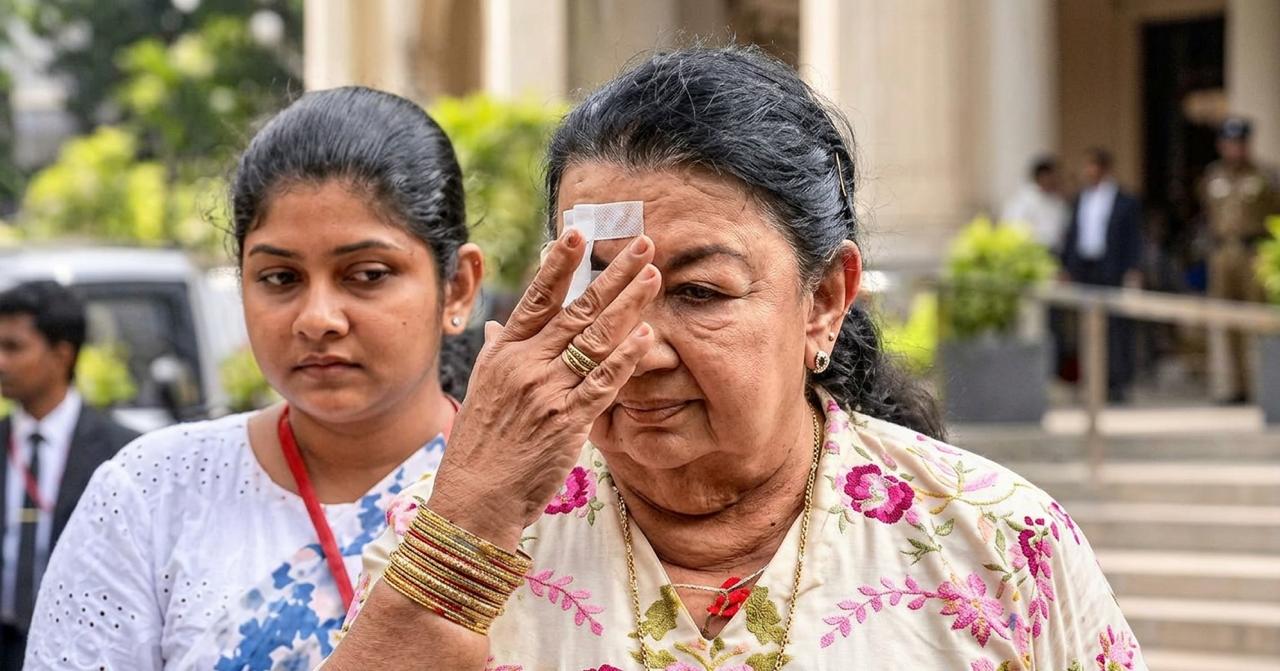
Former First Lady Shiranthi Rajapaksa has been admitted to the Cardiology Unit of the National Hospital of Sri Lanka while remaining in remand custody. Prison authorities say the admission followed medical recommendations. The development raises an important question about healthcare for prisoners, particularly whether the same clinical standards apply to those without political connections.
Former First Lady Shiranthi Rajapaksa was admitted to the Cardiology Unit of the National Hospital of Sri Lanka in Colombo on Monday, following a recommendation by doctors attached to the prison medical service. The transfer represents another development in her period of remand custody, which began following her arrest by the Commission to Investigate Allegations of Bribery or Corruption on 7 October.
Prisons Spokesperson Senaka Pallethanne confirmed that the admission followed medical advice. Rajapaksa had previously been taken to the National Eye Hospital on 9 October for specialist treatment after being referred for an eye condition the preceding day.
Submit Your Press Release
Get your company news, announcements, launches, appointments and events in front of a wider audience.


The latest admission concerns cardiology, although the precise medical circumstances have not been publicly established. There is no legitimate basis for speculating about her diagnosis, and her status as a former First Lady does not extinguish her right to medical confidentiality.
The more important public question concerns the treatment available to people held in State custody.
Sri Lanka’s prison authorities assume responsibility for the health and welfare of those they detain. That obligation applies to convicted prisoners and people awaiting trial. It applies to former political leaders and to ordinary citizens who may never have enjoyed the attention of a television camera.
A prisoner requiring specialist treatment must receive it according to medical necessity. The decision should rest with qualified doctors, not political authorities, prison administrators seeking favour or members of the public demanding that a prominent detainee experience discomfort.
The question is whether those standards operate consistently.
An ordinary woman held in remand who develops symptoms requiring cardiological investigation should have access to the same standard of clinical assessment and referral. The availability of specialist treatment must not depend upon a prisoner’s surname, political history or social standing.
Rajapaksa’s legal difficulties also continued on Monday when the Maligakanda Magistrate’s Court rejected an anticipatory bail application relating to a separate investigation concerning the Siriliya Saviya account.
The application concerned allegations involving Rs. 10 million credited to the account by the National Savings Bank in 2010, reportedly following a request connected to the proposed acquisition of a CT scanner for the Lady Ridgeway Hospital for Children.
The court’s decision turned on jurisdiction. State counsel submitted that the relevant facts had already been reported to the Fort Magistrate’s Court and that the Maligakanda Magistrate’s Court was not the appropriate forum for the application.
The rejection must therefore not be confused with a judicial determination of the underlying allegations.
The distinction is important. Criminal proceedings involve different legal questions at different stages, and the public should not be encouraged to interpret every adverse procedural decision as proof of wrongdoing.
Rajapaksa remains entitled to defend herself against the allegations. Her medical treatment must remain independent of those proceedings.
Sri Lanka has repeatedly declared its commitment to equality before the law. That principle is tested most meaningfully when the individual concerned is either unusually powerful or unusually powerless.
A former First Lady should neither receive preferential treatment nor be denied necessary medical attention to satisfy public anger. Both outcomes would undermine the principle that the law is supposed to protect.
Be that as it may, a country that wishes to demonstrate equality before the law should begin by ensuring that every prisoner who needs a cardiologist can see one, whether or not the prisoner’s husband once occupied Temple Trees – or for that matter had even ever met a President in person.