Sri Lanka created Port City to escape the bureaucracy that has frustrated investment for decades. But questions over transparency, accountability and measurable results raise an uncomfortable possibility: are some of the old habits now following us into the new city?
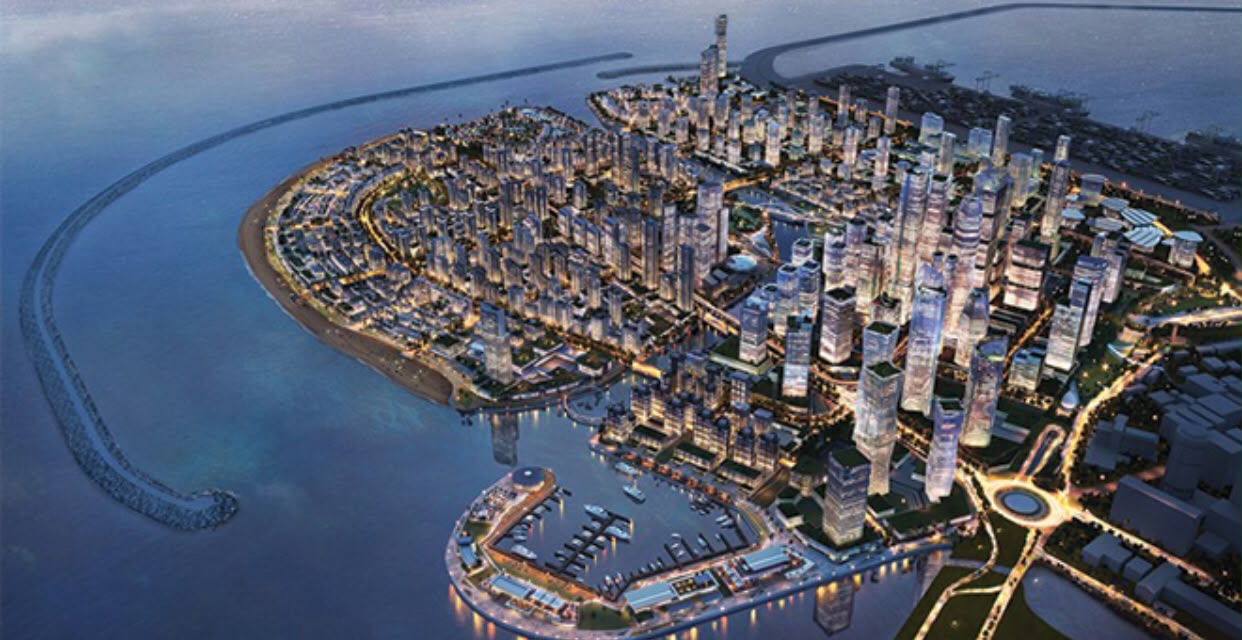
Colombo Port City was never intended to be simply another property development. Built on 269 hectares of reclaimed land, it was conceived as a new economic jurisdiction capable of attracting billions of dollars in international capital, creating high-value employment and positioning Colombo as a serious destination for financial and professional services.
More importantly, Port City was supposed to overcome one of Sri Lanka’s greatest obstacles to investment – its own bureaucracy. The Colombo Port City Economic Commission was therefore created as a single-window facilitator, allowing investors to avoid the familiar journey through multiple ministries, regulators, approvals and administrative delays. Yet five years after the governing legislation was enacted, it is reasonable to ask whether we are beginning to lose sight of those original goalposts.
Submit Your Press Release
Get your company news, announcements, launches, appointments and events in front of a wider audience.


There is progress. Businesses are registering, investment announcements have bewhen the project carries such enormous expectations for the national economy.
The public should be able to establish quite easily how much fresh foreign investment has actually entered the country through Port City, how much remains merely committed, how many registered businesses are actually operating, how many people they employ, how many of those employees are Sri Lankan and how much foreign exchange and tax revenue the project is generating. Equally important is the value of tax concessions and other incentives Sri Lanka has granted in return.
At present, constructing that sort of meaningful audit-type assessment is unnecessarily difficult. There are announcements, projections, presentations and impressive numbers for investment “secured” and businesses registered, but no easily accessible public scoreboard against which the promises can be measured. Investment promised is not necessarily investment received, just as a registered company is not necessarily an operating business employing Sri Lankans.
This brings us to the issue repeatedly raised in Parliament by Batticaloa District MP Shanakiyan Rasamanickam. He has questioned the remuneration of key personnel at the Port City Commission and the difficulty in obtaining those figures publicly. He has not cited information suggesting that some officials may receive between Rs.1.4 million and Rs.2 million monthly, although those figures remain unconfirmed by the Commission.
That uncertainty itself illustrates the problem. There is nothing inherently objectionable about paying substantial salaries to internationally qualified people capable of delivering a multibillion-dollar project. Sri Lanka cannot expect Singapore-level expertise on bargain-basement salaries. But if significant remuneration is justified, disclose it, explain it and allow the public to measure that expenditure against performance.
The salaries of Sri Lanka’s President, Ministers and parliamentarians are matters of public knowledge. It is therefore difficult to understand why remuneration at a statutory institution exercising considerable authority over one the country’s largest development projects should be treated as something requiring secrecy. This is public accountability, not curiosity about somebody’s pay packet.
The Commission could resolve much of this debate by publishing a straightforward quarterly performance statement showing investment actually received, businesses registered and operating, jobs created, foreign-exchange earnings, taxes collected, concessions granted, applications pending and average approval times. Add Commission expenditure and senior remuneration and Sri Lanka would finally possess something approaching a proper scoreboard for Port City.
Such disclosure would not weaken the project. If Port City is performing strongly, the numbers would provide its most convincing defence. If it is falling behind expectations, the Government and Commission would know where intervention is required.
Sri Lanka desperately needs Port City to succeed. International capital has choices, and Colombo is competing against jurisdictions including Dubai, Singapore and Mauritius which understand that investors value speed, regulatory certainty and predictability. A special economic zone cannot therefore be administered with an ordinary bureaucratic mindset. The Commission requires not merely regulatory authority but flexibility, commercial understanding and, above all, a clear vision of what it is trying to build.
There is a danger that the old Sri Lankan habits of delay, institutional defensiveness, managerial pompousness and intransigence and unnecessary secrecy, could gradually establish themselves inside a project specifically created to escape them.
Perhaps, the top members are representing far too many boards with little time to serve those corporates and even less time for state businesses for which they get paid international rates?
That would be an extraordinary waste of an opportunity which Sri Lanka can scarcely afford to lose.
The goalposts were always clear: investment, jobs, foreign exchange and economic activity. The Commission, legislation, regulations and incentives are merely the machinery intended to deliver those outcomes. The success of Port City must therefore ultimately be judged by results rather than announcements.
Publish the numbers and allow the numbers to speak. If they are good, transparency will become one of Port City’s strongest advertisements. If they are not, the country deserves to know that too.
Be that as it may, Port City was created to prove that Sri Lanka could finally do business differently. It would be a remarkable irony if the greatest obstacle to that ambition turned out to be Sri Lanka itself.