Interest-free financing will put more buyers into the Yala market as Government admits Paddy Marketing Board cannot purchase the entire harvest
COLOMBO – Parliament has approved a Rs.7.5 billion supplementary allocation to finance purchases from the current Yala paddy harvest, as the Government attempts to strengthen prices received by farmers while acknowledging that the State cannot itself buy everything the country’s cultivators produce.
Under the programme, eligible small and medium-scale rice millers will be able to obtain interest-free loans of up to Rs.25 million to purchase paddy at government-guaranteed prices. The policy is intended to increase the number of properly financed purchasers competing for the harvest, rather than relying exclusively on the Paddy Marketing Board.
Submit Your Press Release
Get your company news, announcements, launches, appointments and events in front of a wider audience.


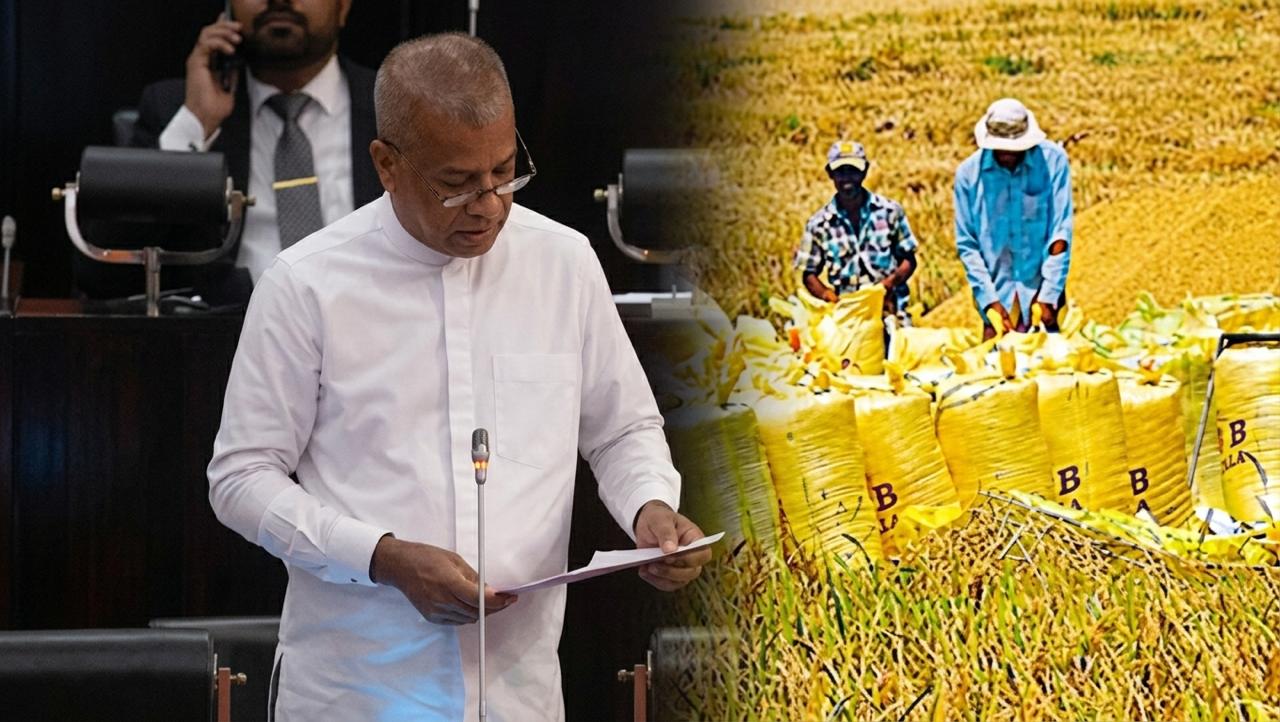
Agriculture Minister K.D. Lal Kantha told Parliament that the Paddy Marketing Board did not possess the capacity to purchase the entire crop. The Government has fixed guaranteed prices of Rs.120 per kilogramme for Nadu, Rs.130 for Samba and Rs.140 for Keeri Samba, although Lal Kantha acknowledged that even the guaranteed price may provide an inadequate return to farmers cultivating lower-yielding land.
Opposition Leader Sajith Premadasa challenged the economics of the arrangement using the Government’s own production-cost calculations. He argued that a farmer earning approximately Rs.100,000 from an acre over a six-month cultivation period would effectively be attempting to support a household on little more than Rs.16,000 a month.
The exchange exposed the difficulty underlying almost every government intervention in Sri Lanka’s rice market. Farmers require a sufficiently high farm-gate price to make cultivation worthwhile, consumers demand affordable rice, millers need a commercial margin and the Treasury cannot indefinitely subsidise the difference between all three.
The Rs.7.5 billion intervention could nevertheless make an important difference if it creates genuine competition at the point of purchase. A farmer facing only one potential buyer has little bargaining power, whereas several properly financed millers purchasing in the same area could reduce the ability of dominant buyers to dictate prices during the harvest.
There is also a larger question concerning what happens to Sri Lanka’s rice after it leaves the field. Production estimates discussed in Parliament indicate that domestic output should theoretically be sufficient to meet annual requirements, yet shortages, sudden retail-price increases and periodic imports have repeatedly returned to the national agenda.
If Sri Lanka is producing sufficient paddy, the problem cannot simply be one of agricultural production. Storage, milling capacity, stocks, distribution and the concentration of purchasing power between the farmer and consumer consequently deserve considerably greater scrutiny.
The Government has now provided Rs.7.5 billion and an interest-free financing mechanism. Its success will ultimately be measured not by the amount allocated in Parliament but by whether the farmer receives the promised price when the harvest reaches the market.