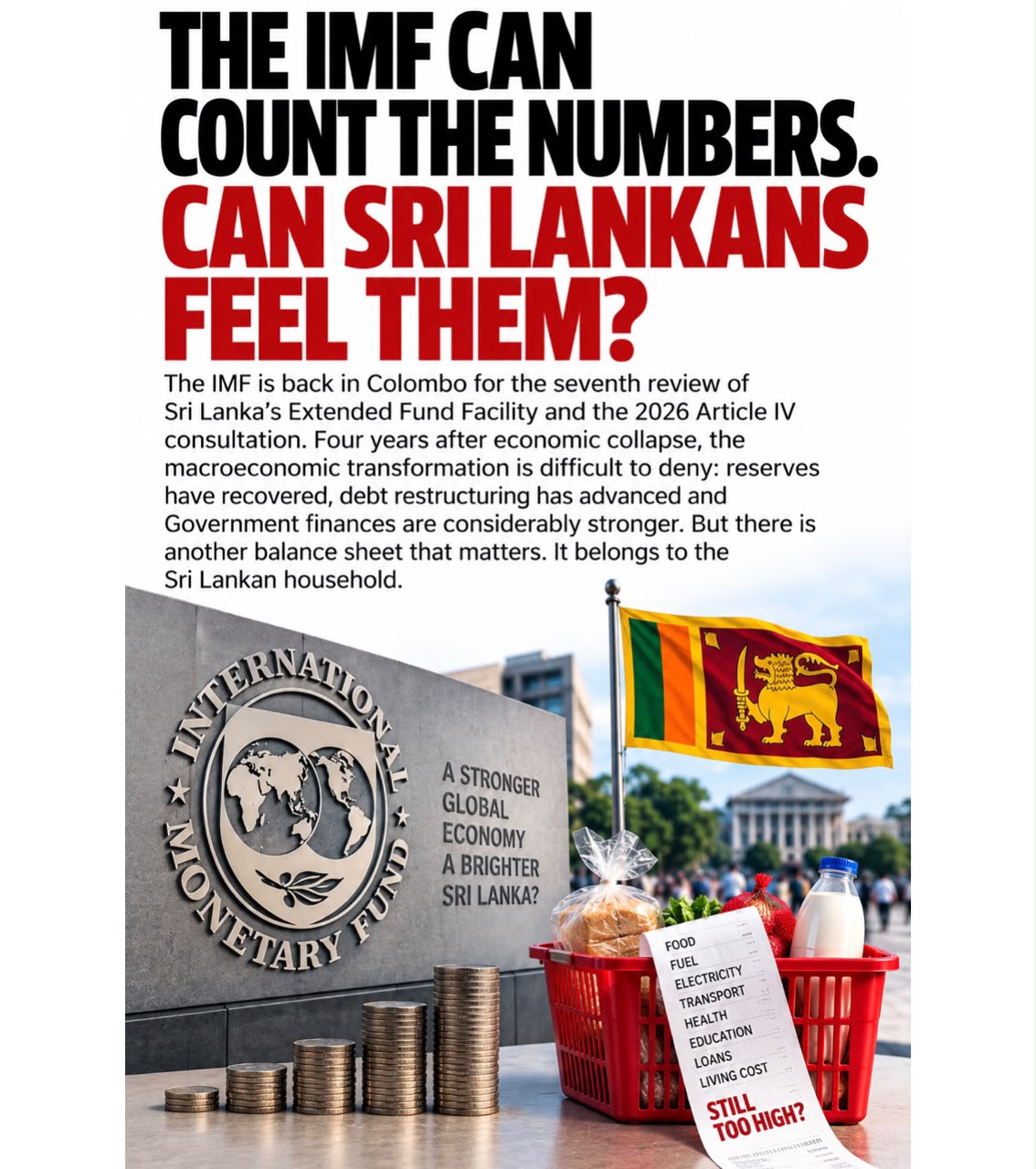
The IMF is back in Colombo for the seventh review of Sri Lanka’s Extended Fund Facility and the 2026 Article IV consultation. Four years after economic collapse, the macroeconomic transformation is difficult to deny: reserves have recovered, debt restructuring has advanced and Government finances are considerably stronger. But there is another balance sheet that matters. It belongs to the Sri Lankan household.
The International Monetary Fund is once again examining Sri Lanka’s economic books, with discussions under the seventh review of the Extended Fund Facility taking place alongside the country’s 2026 Article IV consultation.
The review comes at an intriguing moment.
Submit Your Press Release
Get your company news, announcements, launches, appointments and events in front of a wider audience.


By many of the conventional measurements used to judge an economy emerging from sovereign default, Sri Lanka has travelled a considerable distance. Foreign reserves have been rebuilt, debt restructuring has substantially progressed, Government revenue has increased and the primary balance has moved into surplus.
The economy itself has returned to growth after the extraordinary contraction of the crisis years.
These are not imaginary achievements and pretending otherwise serves little purpose. The Sri Lanka of 2026 is not the Sri Lanka of 2022, when fuel queues stretched for kilometres, power cuts governed daily life and usable foreign exchange had virtually disappeared.
But neither is economic stabilisation the same thing as economic recovery for everybody.
That distinction becomes increasingly important as the IMF programme approaches its final stages. Sri Lankans have absorbed higher taxation, cost-reflective electricity pricing, increased fuel costs and a range of reforms intended to repair a State that for years spent considerably more than it could sustainably afford.
Those measures helped produce the numbers the IMF is now examining.
The question is when those numbers begin producing something tangible for the people who paid for them.
A primary surplus means something important to an economist. A mother deciding whether the week’s money stretches to food, electricity, school expenses and medicine experiences the economy through an entirely different set of indicators.
Both measurements matter.
The Government therefore faces an increasingly delicate political challenge. It must preserve the fiscal discipline that helped restore confidence without allowing economic reform to become synonymous with permanent sacrifice.
That becomes harder when events outside Sri Lanka intervene.
Oil has moved back above US$100 a barrel as the conflict around the Strait of Hormuz disrupts shipping and threatens global energy supplies. Freight and insurance costs are increasing, while the rupee has weakened during the year.
Sri Lanka can do almost nothing about the war.
It can, however, determine how resilient the economy is when the consequences arrive.
That is precisely why abandoning fiscal discipline now would be dangerous. The reserves rebuilt during the recovery are not trophies to be displayed. They are part of the country’s defence against precisely the kind of external shock now developing in the Middle East.
The same applies to Government revenue.
Sri Lanka cannot return to an economic model in which politically attractive expenditure is financed by borrowing and the consequences are left for somebody else to confront later.
But neither can policymakers hide permanently behind the IMF.
The programme exists to help Sri Lanka restore stability. It cannot decide how the benefits of that stability are distributed, which industries the country develops, where investment goes, how productivity increases or whether young Sri Lankans conclude that their future lies here rather than at an airport departure gate.
Those decisions belong to Sri Lanka.
The IMF can determine whether the arithmetic works.
The Government must now demonstrate whether the country does.