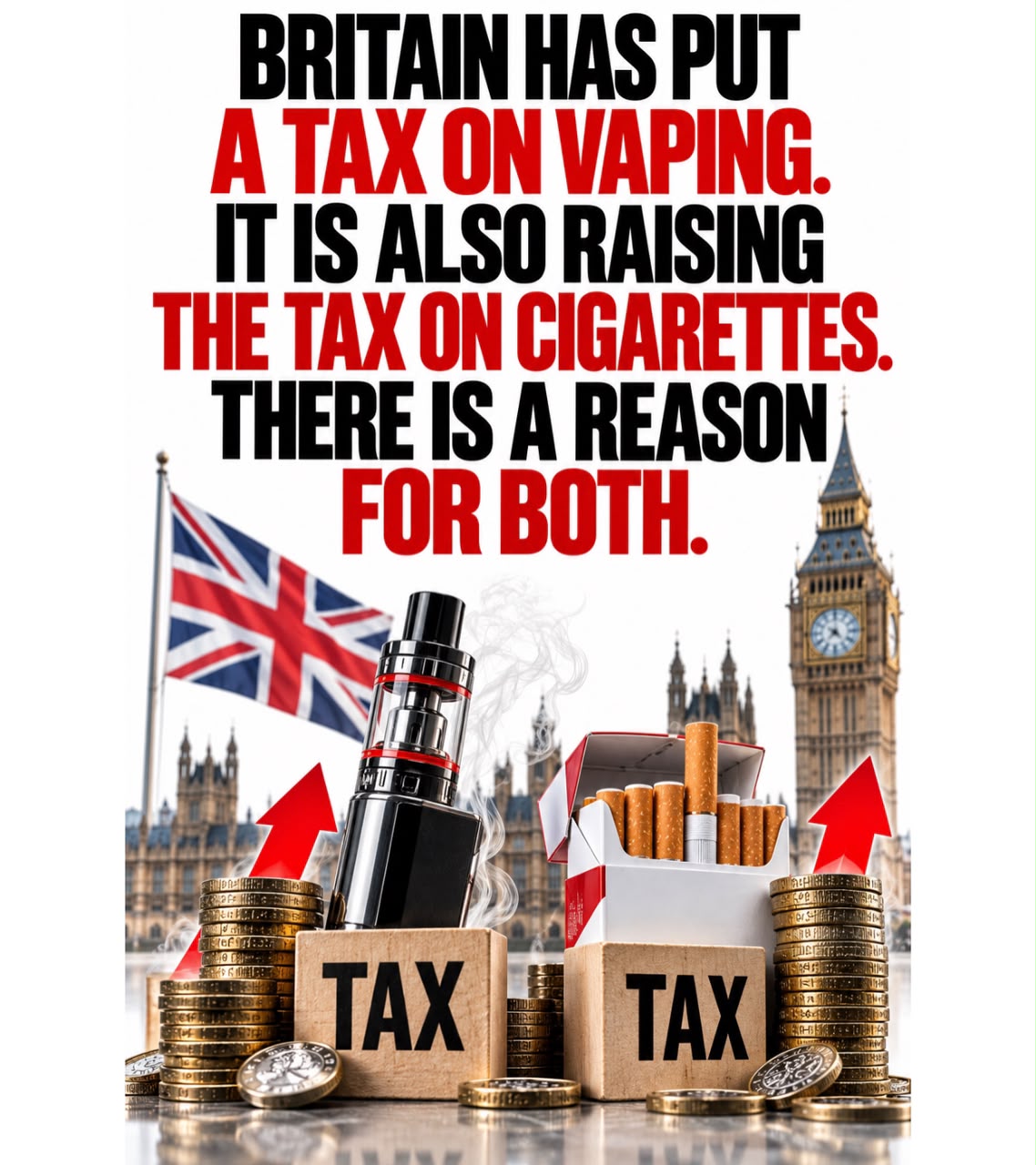
Britain yesterday began charging a new tax of £2.20 on every 10ml of vaping liquid, whether it contains nicotine or not. At precisely the same time it increased tobacco duty. Tax the vape, but make sure the cigarette remains more expensive. It is an interesting attempt to use the tax system to discourage one behaviour without accidentally encouraging something worse.
The new Vaping Products Duty applies to vaping liquids manufactured in or imported into the United Kingdom from October 1.
The rate works out at 22 pence per millilitre.
Submit Your Press Release
Get your company news, announcements, launches, appointments and events in front of a wider audience.


A 10ml bottle therefore attracts £2.20 in excise duty. A 50ml quantity attracts £11. A 100ml quantity means £22 before considering the continuing application of VAT.
That is enough to alter the economics of vaping.
The British Government says that is exactly the point.
It wants to reduce the affordability and attraction of vaping, particularly for children and people who do not already smoke. But it also accepts that vaping is less harmful than smoking and can help adult smokers quit cigarettes.
There lies the policy problem.
Make vaping considerably more expensive and some smokers considering switching may decide not to bother. Worse, existing vapers could conceivably return to cigarettes if the price gap narrows sufficiently.
Britain has therefore increased tobacco duties at the same time.
From October 1 tobacco duty rises by the existing escalator of inflation plus two percentage points, together with an additional one-off increase equivalent to £2.20 per 100 cigarettes or 50 grams of other tobacco products. The Government explicitly says the additional increase is intended to preserve the financial incentive to choose vaping rather than smoking.
In other words, Britain is taxing both.
Just not equally.
There is another part of the system which may prove equally interesting.
Vaping products are getting duty stamps.
Those stamps will eventually provide digital traceability through the supply chain. Manufacturers and importers come within the excise system, while retailers have until March 31 next year to dispose of eligible existing unstamped stock. From April 1, 2027, vaping products sold in Britain must carry a valid duty stamp.
The Government hopes that will make illegal products easier to identify.
It needs to.
Every substantial tax creates an incentive to avoid it. Raise the legal price of a product while illegal versions remain available and the illicit trader suddenly receives a rather generous competitive advantage from the Treasury.
Britain is putting £30 million a year until 2028-29 into Trading Standards, Border Force and HM Revenue & Customs to tackle illegal and underage tobacco and vape sales. The Government expects the vaping duty itself eventually to raise more than £550 million annually by 2030-31.
That produces the uncomfortable question attached to most so-called health taxes. Is the objective to make money from the behaviour or to make the behaviour disappear?
If vaping declines dramatically, Treasury revenue declines with it. If revenue keeps growing, a great many people are presumably still vaping.
Britain estimates about 5.1 million individuals who vape will be affected by the new duty.
Be that as it may, the clever part of yesterday’s change is not simply putting £2.20 on a bottle of vape liquid.
It is recognising that when government makes one unhealthy choice more expensive, it had better make very sure it has not just made the more dangerous choice look cheaper.